
Restrict root keys by IP, get free custom domain subdomains, and guide the CLI
New features
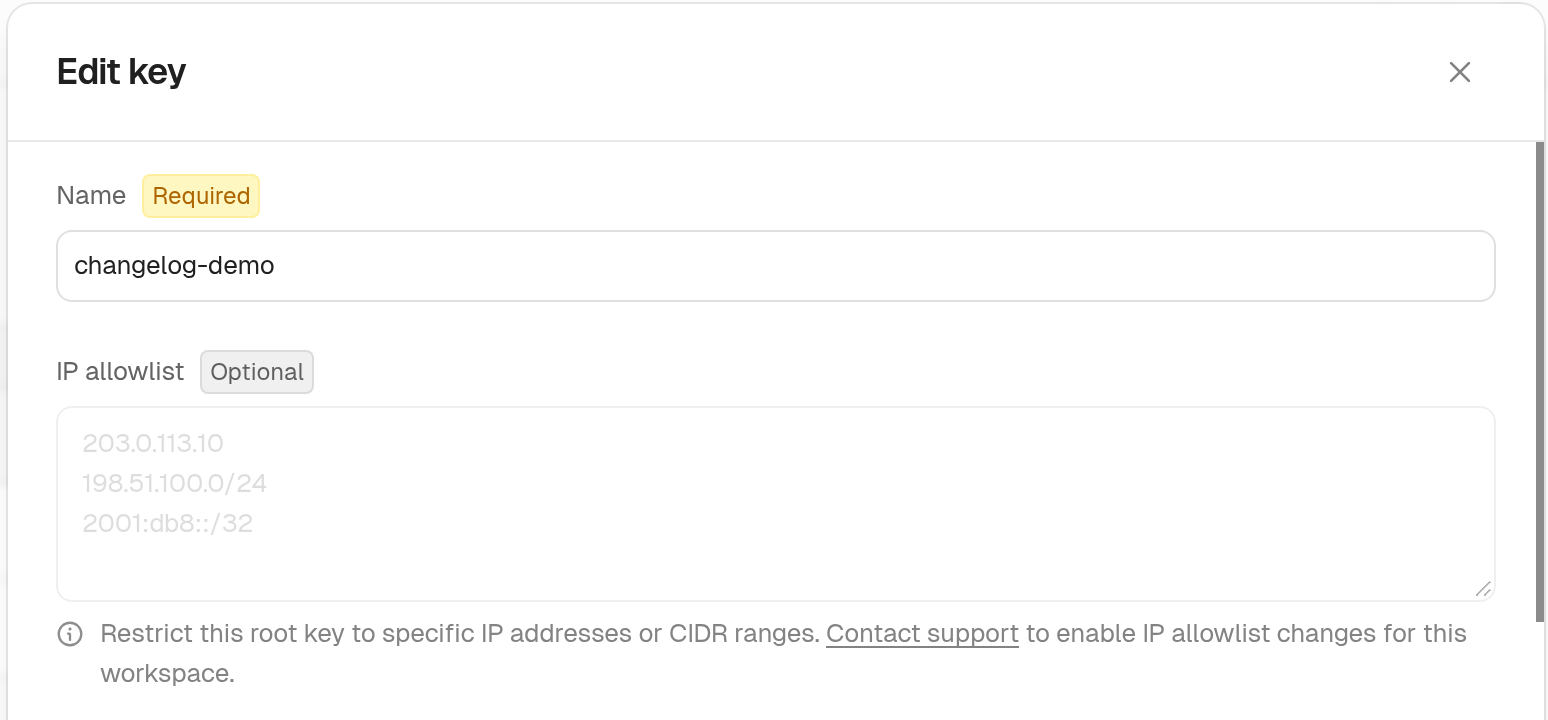
Restrict a root key by IP address
You can limit which source addresses may authenticate with a root key. Set IPv4 or IPv6 addresses and CIDR ranges on the key. Requests from outside that list get HTTP 401, the same shape as a missing key, before Unkey runs the rest of the call.
IP allowlists are a paid add-on. Contact support to enable them on your workspace.
Set the list in the dashboard under Root Keys, through the API, or with --ip-allowlist on unkey root-keys create and unkey root-keys update. See Configure root keys and Audit log event types.
Unlimited subdomains under one custom domain
Subdomains of a custom domain you already have no longer count against your plan limit. Once api.acme.com is attached, app.acme.com, acme.com, and other names under acme.com are free. A hostname under a different registered domain still counts as another custom domain.
Each name still needs its own DNS verification. Shared hosting suffixes such as github.io are not treated as one domain. Starter still includes one custom domain with unlimited subdomains. See Custom domains and Limits.
Guided prompts in the CLI
Canonical resource commands ask for missing required fields when you run them in a terminal. You can browse existing projects, apps, keys, and other resources, edit answers before submit, and correct rejected fields without retyping everything. Destructive actions default to Cancel. Use --interactive to fill optional fields, or --no-input and --yes in scripts.
unkey whoami (and unkey auth status) shows which credential the CLI will use, whether a browser session still works, and which workspace it belongs to. It never prints the credential itself.
See CLI output and shared flags and CLI authentication.
Updates
Stop the previous production deployment early
While a previous production deployment is still on standby for instant rollback, you can stop it from the deployment page. That frees the compute sooner. Stopping it also ends the instant rollback window for that pair, so the confirmation explains the tradeoff.
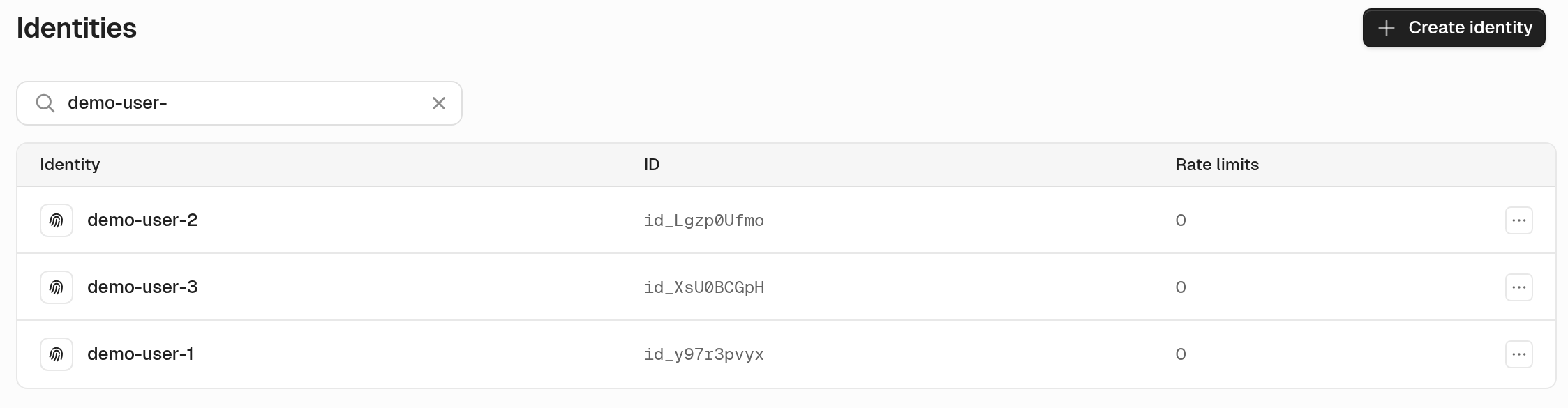
Identities list as a table
Identities use the same table pattern as apps and other resource lists, with search, full IDs, and Show more.
Banner when a payment fails
If a subscription payment fails, the dashboard shows a payment failed banner and the billing page reflects the status so you can update the card.
New root keys use an rk_ ID prefix
New and rerolled root keys get IDs that start with rk_. Existing root keys keep their key_ IDs. The secret format (unkey_...) is unchanged.
More events in the audit log
IP allowlist denials, each check inside ratelimit.multiLimit, and CLI session create, refresh, and revoke events appear in the audit log and its filters.
Bug fixes
- Redeploy after a change rebuilds the environment you edited, not always production
- Overview metric cells with an all-zero series show the empty state instead of a flat baseline
- Long names in roles, permissions, and keys lists use the full column width
- Clicking a checkbox in the roles or permissions table selects the row without opening the edit dialog
- On Linux, when the secret store fails,
unkey loginstores the session under~/.unkeyand prints a warning - Builds that fail because a renamed branch left a stale git ref automatically reset the project build cache and retry
- Key verification and root key caches keep stale data for at most 30 seconds
- Rate limit override and API delete responses no longer reveal whether an unreadable resource exists